
Tecnología de ropa interior de época & Materiales: una guía del comprador para la absorción, telas & A prueba de fugas?
Selecting the right materials and technology for period underwear can be overwhelming. Many businesses choose inappropriate fabrics or inadequate absorbent layers, resulting in products that leak, feel uncomfortable, or fail to meet customer expectations.
La ropa interior del período de alta calidad combina múltiples capas especializadas: una capa superior de absorción de humedad para la comodidad, una capa intermedia absorbente que puede contener múltiples tampones de fluido y una capa inferior a prueba de fugas, todo mientras mantiene un perfil delgado y un ajuste cómodo. Los mejores productos equilibran la absorbencia, la transpirabilidad y las propiedades de secado rápido.
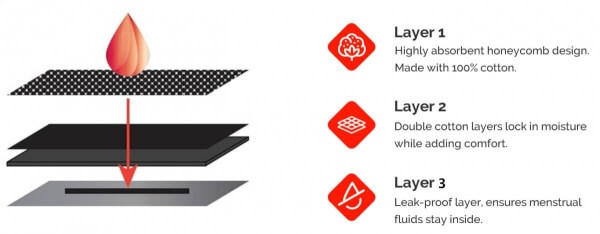
As a manufacturer who's helped develop period underwear for major retailers like Primark and specialty brands like VIITA, I've gained deep insights into what makes these products work. At HAVING, we've tested countless material combinations and construction techniques to create period underwear that performs reliably while remaining comfortable. Let me share what we've learned about the critical components that make period underwear effective.
¿Cómo funciona realmente la ropa interior del período?
Many businesses underestimate the technical complexity of period underwear. Understanding the fundamental technology is essential for creating products that perform consistently and meet consumer expectations.
Period underwear functions through a multi-layer system: the top layer quickly wicks moisture away from the body, the middle layer(s) absorb and lock away fluid (typically holding 1-4 tampons' worth depending on design), while the bottom layer prevents leakage. These layers work together to keep the wearer dry and comfortable while containing menstrual flow for hours.
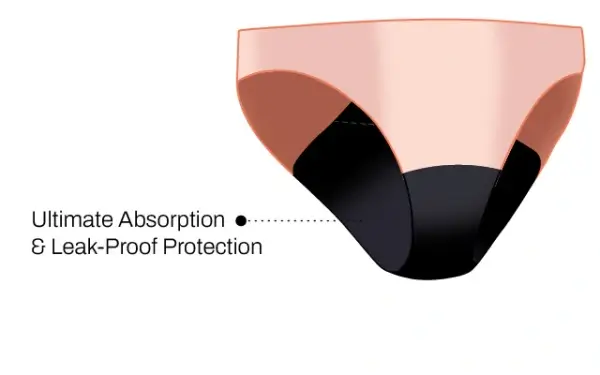
When we first started developing period underwear at HAVING, we quickly realized that creating effective products requires specialized knowledge that goes beyond standard underwear manufacturing. The technology behind period underwear is sophisticated, combining principles from both textile engineering and absorbent product design.
La ciencia de la absorbencia
La ropa interior menstrual se basa en varios principios físicos para funcionar eficazmente:
Acción capilar
La capa absorbente inicial utiliza la acción capilar, el mismo fenómeno que atrae el agua a través de las raíces de las plantas. Los pequeños espacios entre las fibras crean vías que alejan el líquido de la superficie y lo llevan al núcleo absorbente.
Absorción versus adsorción
La ropa interior menstrual eficaz utiliza ambos procesos:
- Absorción: La absorción de líquido en todo el volumen del material.
- Adsorción: La adhesión de moléculas de fluido a la superficie de un material.
Las mejores capas absorbentes combinan materiales que destacan en ambos procesos.
Retención de fluidos bajo presión
A critical factor often overlooked is how well the absorbent layer holds fluid when compressed (like when the wearer sits down). This property, called "retention under pressure," distingue la ropa interior menstrual de alto rendimiento de los productos inferiores.
El sistema de múltiples capas
La ropa interior de la época moderna suele presentar entre 3 y 5 capas distintas, cada una con una función específica:
| Capa | Función | Materiales comunes |
|---|---|---|
| Capa superior (capa de contacto) | Elimina la humedad del cuerpo y proporciona comodidad. | Mezclas de algodón, bambú, modal y microfibra. |
| Capa(s) central absorbente(s) | Capta y retiene líquido. | Microfibra, algodón, fibras absorbentes especializadas. |
| Barrera a prueba de fugas | Impide el paso del líquido | Laminado de poliuretano (PUL), TPU |
| Capa exterior | Proporciona estructura y apariencia. | Mezclas de algodón, nailon, poliéster y spandex. |
Métricas de rendimiento
Al desarrollar ropa interior menstrual en HAVING, evaluamos los productos en función de varias métricas clave de rendimiento:
- Capacidad de absorbencia total: Medido en mililitros (ml) o equivalentes de tampón
- Tasa de absorción: Qué tan rápido se extrae el líquido de la superficie
- Retención bajo presión: How well the product holds fluid when compressed
- Rewet Value: Amount of fluid that returns to the surface when pressure is applied
- Tiempo de secado: How quickly the product dries after washing
These metrics provide objective measures of performance that help ensure consistent quality across production runs.
For a comprehensive overview of the entire period underwear category, including market trends and business opportunities, visit our Guía Ultimate B2B para el abastecimiento & Ropa interior del período de venta.
¿Qué telas faciales funcionan mejor para la ropa interior de época?
Selecting the right face fabric is crucial for both comfort and performance. Many businesses mistakenly limit themselves to cotton when numerous options can work effectively.
Period underwear can utilize virtually any fabric used in traditional underwear, including cotton, bamboo, modal, nylon, polyester, and blends. The key is pairing these face fabrics with appropriate inner layers. Cotton offers breathability and comfort, bamboo provides natural antimicrobial properties, while synthetic blends enhance moisture-wicking and quick-drying capabilities.
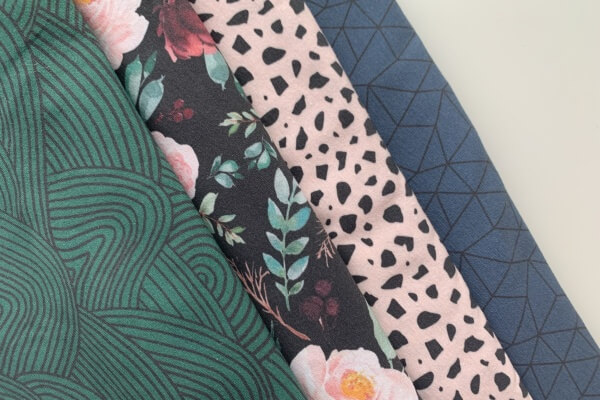
At HAVING, we've successfully developed period underwear using all major fabric types. This versatility allows brands to maintain consistency with their existing underwear lines while adding period functionality. Let's explore the advantages and considerations for each material option:
Fibras Naturales
Algodón
Advantages:
- Excellent breathability
- Soft and comfortable against skin
- Familiar to consumers
- Available in organic options
- Hipoalergénico
Considerations:
- Slower drying time
- Less durability than synthetics
- Limited stretch without blending
- Potential shrinkage
Cotton remains the most popular face fabric for period underwear, particularly for brands emphasizing natural materials. At HAVING, we often recommend cotton blends (95% cotton/5% spandex) to provide the comfort of cotton with added stretch and recovery.
Bambú
Advantages:
- Natural antimicrobial properties
- Exceptionally soft texture
- Excelente reducción de humedad
- Sustainable growth profile
- Temperature regulating
Considerations:
- Higher cost than cotton
- Processing methods vary in eco-friendliness
- Typically requires blending for durability
Bamboo has gained popularity for its combination of comfort and performance properties. Its natural antimicrobial qualities make it particularly suitable for period underwear.
Modal y tencel
Advantages:
- Textura suave y sedosa
- Excellent drape
- Good moisture management
- Semi-synthetic with natural origin
- Biodegradable
Considerations:
- Higher cost
- Less durable than synthetics
- Chemical processing required
These cellulosic fibers offer a luxury feel while maintaining good performance characteristics, making them ideal for premium period underwear lines.
Fibras sintéticas
Nylon
Advantages:
- Excelente durabilidad
- Good moisture-wicking
- Seco rápido
- Smooth, lightweight feel
- High elasticity when blended
Considerations:
- Less breathable than natural fibers
- Petroleum-based
- Can retain odors without antimicrobial treatment
Nylon works particularly well for athletic period underwear where durability and quick-drying properties are essential.
Poliéster
Advantages:
- Very quick-drying
- Excelente reducción de humedad
- High durability
- Color retention
- Resistant to shrinking
Considerations:
- Less breathable than natural fibers
- Petroleum-based
- Can feel less premium than natural options
Polyester and polyester blends are excellent for performance-focused period underwear, particularly styles designed for active use.
Telas mezcladas
La mayoría de la ropa interior de época comercial utiliza tejidos mezclados para combinar los beneficios de diferentes fibras:
| Mezcla común | Proporción típica | Mejor para |
|---|---|---|
| Algodón/spandex | 95/5 o 90/10 | Comodidad diaria con elasticidad. |
| Bambú/Algodón/Spandex | 70/25/5 | Sensación natural premium con rendimiento |
| Nylon/spandex | 80/20 o 85/15 | Estilos atléticos, necesidades de secado rápido. |
| Poliéster/spandex | 85/15 o 90/10 | Estilos de rendimiento, durabilidad. |
| Modal/spandex | 90/10 o 95/5 | Sensación de lujo, posicionamiento premium |
Aplicaciones especializadas
Diferentes casos de uso pueden requerir consideraciones específicas sobre el tejido:
Ropa interior del período de yoga
Para aplicaciones de yoga y fitness, normalmente recomendamos:
- Mezclas de nailon y spandex para mayor durabilidad durante el movimiento.
- Tratamientos antimicrobianos para controlar el olor durante el uso prolongado.
- Construcción perfecta para evitar el roce
- Mayor contenido de spandex (15-20%) para máxima elasticidad.
Traje de baño de época
Los trajes de baño de época requieren materiales especializados:
- Telas resistentes al cloro (normalmente a base de poliéster)
- Tratamientos resistentes a los rayos UV
- Propiedades de secado rápido
- Componentes resistentes al agua salada
At HAVING, we've developed period swimwear that maintains its absorbency and leak-proof properties even after repeated exposure to chlorine and salt water.
For detailed guidance on building a diverse product line with various fabrics and styles, explore our resource on Curación de su colección: una guía B2B para estilos de ropa interior de época, absorbencias & Opciones de material.
¿Qué hace que una capa absorbente efectiva?
The absorbent core is the heart of period underwear technology. Many products fail because they use inadequate or poorly designed absorbent layers that can't handle real-world menstrual flow.
Effective absorbent layers in period underwear combine high capacity (typically 10-60ml depending on intended use), quick absorption rate to prevent surface pooling, and retention under pressure to prevent leakage when sitting or moving. Modern designs use multiple thin layers rather than one thick layer to maintain a slim profile while maximizing performance.
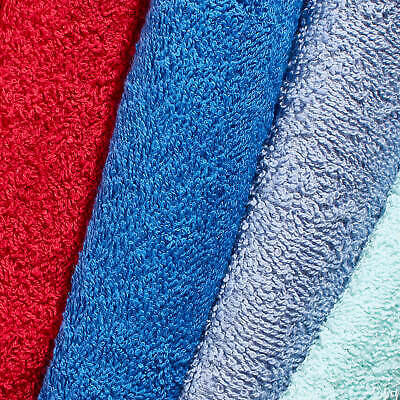
At HAVING, we've invested significant R&D into developing absorbent layers that balance capacity, comfort, and durability. Our testing has revealed several key factors that determine absorbent layer effectiveness:
Materiales absorbentes
Several materials are commonly used in period underwear absorbent layers:
Microfibra
Advantages:
- High absorbency-to-weight ratio
- Retains shape after washing
- Seco rápido
- Cost-effective
Considerations:
- Synthetic origin
- Varying quality levels
- Potential microplastic shedding
Microfiber is the most common absorbent material in period underwear due to its excellent performance characteristics and reasonable cost.
Vellón de algodón
Advantages:
- Natural material
- Good absorbency
- Soft and comfortable
- Available in organic options
Considerations:
- Bulkier than microfiber
- Slower drying time
- Lower capacity per weight
Cotton fleece works well for brands prioritizing natural materials, though it typically creates a slightly thicker product than microfiber alternatives.
Fibras absorbentes especializadas
Advantages:
- Extremely high capacity
- Engineered specifically for fluid absorption
- Thinner profiles possible
Considerations:
- Higher cost
- Often proprietary
- May require special handling in manufacturing
These advanced materials are typically used in premium products or those designed for very heavy flow.
Niveles de absorción
Period underwear is typically categorized by absorbency level, measured either in milliliters (ml) or tampon equivalents:
| Nivel de absorción | Capacity (ml) | Tampon Equivalent | Mejor para |
|---|---|---|---|
| Luz | 5-10ml | 1 regular tampon | Spotting, very light days, backup protection |
| Medio | 10-20ml | 2 regular tampons | Light to moderate flow days |
| Pesado | 20-30ml | 3 regular tampons | Moderate to heavy flow days |
| Super/durante la noche | 30-60ml | 4+ regular tampons | Very heavy flow, overnight use, postpartum |
At HAVING, we've also developed specialized high-absorbency products for incontinence applications (like our work with VIITA), which can hold significantly more fluid than standard period underwear.
Diseño de capa absorbente
The configuration of absorbent materials significantly impacts performance:
Colocación estratégica
Effective period underwear doesn't simply place absorbent material uniformly throughout the gusset. Instead, it strategically concentrates absorbency where it's most needed:
- Higher concentration in the central gusset area
- Extended coverage toward the back for overnight protection
- Targeted placement based on flow patterns during different activities
Enfoque de múltiples capas
Rather than one thick absorbent layer, high-performance period underwear uses multiple thin layers:
- Improves fluid distribution
- Maintains a slimmer profile
- Enhances drying time after washing
- Creates redundancy for leak protection
Estructuras de canalización
Advanced designs incorporate fluid channeling structures:
- Directs fluid away from edges
- Distributes moisture throughout the absorbent core
- Prevents pooling in one area
- Maximizes the use of available absorbent capacity
For detailed information on quality control standards and testing protocols for absorbent layers, visit our resource on Asegurar la excelencia del producto: control de calidad & Estándares de fabricación para el abastecimiento de ropa interior de época.
¿Cómo funcionan las barreras a prueba de fugas?
The leak-proof barrier is critical to period underwear functionality. Without effective leak-proofing, even the most absorbent product will fail to provide the protection consumers expect.
Leak-proof barriers in period underwear typically use thin polyurethane laminate (PUL) or thermoplastic polyurethane (TPU) layers that block fluid transmission while allowing some breathability. These barriers must be strategically sized and placed to prevent leaks without compromising comfort, with particular attention to edge sealing and gusset construction.
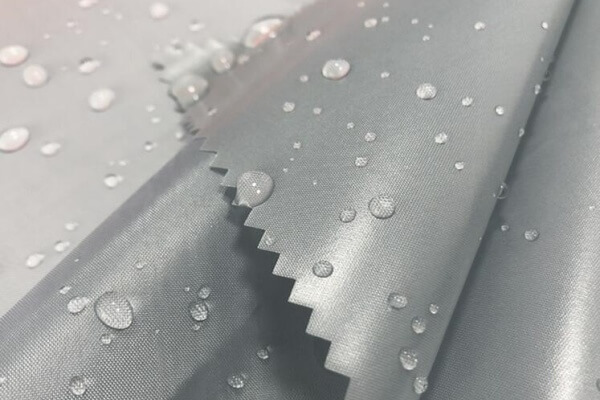
At HAVING, we've refined our leak-proof barrier technology through extensive testing and real-world feedback. Our experience has identified several key factors that determine leak-proof effectiveness:
Materiales de barrera
Several materials are used for leak-proof barriers in period underwear:
Laminado de poliuretano (PUL)
Advantages:
- Excellent leak protection
- Relatively breathable
- Durable through multiple washes
- Thin profile
Considerations:
- Requires precise application
- Can delaminate if improperly constructed
- Synthetic material
PUL is the most common leak-proof barrier in period underwear, consisting of a thin polyurethane coating applied to a substrate fabric.
Poliuretano termoplástico (TPU)
Advantages:
- Very thin profile
- Highly flexible
- Good durability
- Can be heat-bonded
Considerations:
- Typically less breathable than PUL
- Higher cost
- Requires specialized application
TPU is often used in premium period underwear where minimizing bulk is a priority.
Barreras a base de silicona
Advantages:
- Extremely flexible
- Maintains properties through many wash cycles
- Can be applied in patterns
Considerations:
- Higher cost
- Specialized application process
- Limited breathability
These advanced barriers are typically found in high-end products or specialized applications like period swimwear.
Factores de diseño críticos
Several design elements are crucial for effective leak-proofing:
Colocación de barreras
The leak-proof barrier must extend:
- Beyond the absorbent core on all sides
- Higher in the back for sleeping positions
- Along the leg openings where leaks commonly occur
- With consideration for different body movements
Sellado de borde
The edges of the barrier layer must be properly sealed to prevent leakage:
- Bonded or sewn with waterproof thread
- Overlapped with absorbent material
- Protected from mechanical stress during wear
Construcción de escudete
The gusset design significantly impacts leak protection:
- Wider gussets provide more coverage but can feel bulky
- Contoured gussets better match body shape
- Floating gussets can improve fit and leak protection
Equilibrar la protección contra las fugas y la transpirabilidad
One of the biggest challenges in period underwear design is balancing leak protection with breathability:
| Design Approach | Protección contra fugas | Transpirabilidad | Mejor para |
|---|---|---|---|
| Full Barrier Coverage | Excelente | Limitado | Heavy flow, overnight |
| Strategic Barrier Placement | Muy bien | Bien | Everyday use |
| Microporous Barriers | Bien | Excelente | Light flow, active use |
| Zoned Protection | Varies by zone | Varies by zone | Specialized applications |
At HAVING, we've developed proprietary techniques for creating leak-proof barriers that maintain breathability while providing reliable protection. Our approach varies based on the intended use case and absorbency level of the product.
For information on how these technical elements translate into different product styles and applications, explore our guide on Curación de su colección: una guía B2B para estilos de ropa interior de época, absorbencias & Opciones de material.
¿Qué importancia son las consideraciones de seguridad y sostenibilidad?
Safety and sustainability have become critical factors in period underwear development. Consumers are increasingly concerned about potential health impacts and environmental footprint of the products they use intimately.
Safety and sustainability are now primary purchase drivers for period underwear consumers. PFAS-free construction is essential as awareness grows about these potentially harmful "forever chemicals" encontrado en algunos tratamientos impermeabilizantes. Además, la elección de materiales sostenibles (algodón orgánico, fibras recicladas) y las prácticas de fabricación éticas influyen significativamente en la preferencia del consumidor y su disposición a pagar precios superiores.
En HAVING, hemos hecho de la seguridad y la sostenibilidad un elemento central en nuestra fabricación de ropa interior de época. Nuestros productos sin PFAS cumplen con rigurosos estándares de prueba, lo que aborda una importante preocupación de los consumidores en esta categoría. Esto es lo que las empresas necesitan saber sobre estas consideraciones críticas:
Preocupaciones de PFA en ropa interior de época
Las sustancias perfluoroalquiladas y polifluoroalquiladas (PFAS) se han convertido en una preocupación importante en la ropa interior menstrual:
¿Qué son los PFA?
PFAS are a group of manufactured chemicals that have been used in industry and consumer products since the 1940s. They're often called "forever chemicals" because they don't break down naturally in the environment or the human body.
¿Por qué son preocupantes?
PFAS have been linked to:
- Hormone disruption
- Immune system effects
- Increased cancer risk
- Developmental issues
- Liver damage
PFAS en ropa interior de época
Some period underwear manufacturers have historically used PFAS in their leak-proof barriers. Recent testing and lawsuits have raised consumer awareness about this issue, making PFAS-free products increasingly important.
Alternativas sin PFA
At HAVING, we've developed PFAS-free leak-proof technologies that provide excellent performance without these concerning chemicals. Our approach uses:
- Alternative waterproofing treatments
- Physical barrier methods rather than chemical treatments
- Innovative material combinations
Consideraciones de seguridad de materiales
Beyond PFAS, several other safety factors should be considered:
Materiales de contacto de la piel
Materials that directly contact skin should be:
- Free from harmful dyes and finishes
- Tested for skin irritation potential
- Hypoallergenic when possible
- Free from endocrine-disrupting chemicals
Certificaciones a considerar
Several certifications help verify product safety:
- OEKO-TEX Standard 100 (asegura que los textiles estén libres de sustancias dañinas)
- GOTS (for organic materials)
- bluesign® (for environmentally safe production)
Protocolos de prueba
Comprehensive safety testing should include:
- Chemical residue testing
- Cytotoxicity testing
- Skin irritation testing
- pH testing
Factores de sostenibilidad
Sustainability has become a major purchase driver for period underwear consumers:
Selección de materiales
Sustainable material options include:
- Organic cotton (reduces pesticide use)
- Recycled polyester (diverts plastic from landfills)
- Bamboo (rapidly renewable resource)
- TENCEL™/Lyocell (closed-loop production process)
Consideraciones de fabricación
Sustainable manufacturing practices include:
- Water conservation techniques
- Energy-efficient production
- Waste reduction strategies
- Chemical management systems
Opciones de embalaje
Eco-friendly packaging options include:
- Recycled/recyclable paper
- Biodegradable materials
- Plastic-free alternatives
- Minimalist designs that reduce material use
Ciclo de vida del producto
Consider the entire lifecycle of period underwear:
- Durability (longer-lasting products create less waste)
- Washability (products that maintain performance through many washes)
- End-of-life considerations (biodegradability, recycling programs)
Equilibrar el rendimiento y la sostenibilidad
Creating period underwear that is both high-performing and sustainable requires careful material selection and design:
| Component | Conventional Option | Sustainable Alternative | Performance Impact |
|---|---|---|---|
| Face Fabric | Conventional cotton | Algodón orgánico | Minimal difference |
| Absorbent Layer | Virgin polyester microfiber | Recycled polyester microfiber | Minimal difference with quality sources |
| Barrera a prueba de fugas | PFAS-treated barrier | PFAS-free barrier | Comparable with proper design |
| Elastic/Trim | Virgin nylon/spandex | Recycled nylon/spandex | Minimal difference |
At HAVING, we've found that sustainable alternatives can match or exceed the performance of conventional materials when properly selected and implemented. Our experience with major retailers like Primark demonstrates that sustainability and performance can coexist even at accessible price points.
For more information on compliance requirements and certification processes, visit our comprehensive guide on Abastecimiento con confianza: navegación de cumplimiento, certificaciones & Normas de fábrica.
¿Cómo evalúa la calidad de la ropa interior del período?
Assessing period underwear quality can be challenging without specialized knowledge. Many businesses lack clear criteria for evaluating samples and production quality, leading to inconsistent products and customer disappointment.
Quality period underwear should be evaluated on multiple criteria: absorbency capacity (verified through standardized testing), leak resistance (tested under pressure and movement), comfort (assessed for softness, flexibility, and breathability), durability (maintaining performance through multiple wash cycles), and construction quality (examining seams, stitching, and material integrity).
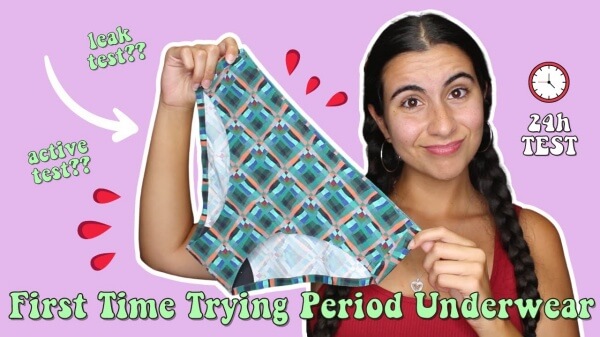
At HAVING, we've developed comprehensive quality evaluation protocols for period underwear. Our experience manufacturing millions of units annually has taught us what separates exceptional products from mediocre ones. Here's how we recommend evaluating period underwear quality:
Métodos de prueba de objetivos
Several standardized tests can objectively measure period underwear performance:
Prueba de absorción
Total Capacity Test:
- Measure dry weight
- Saturate with test fluid (typically a saline solution that mimics menstrual fluid)
- Allow excess to drain for a standardized time
- Weigh again to determine fluid retention
Absorption Rate Test:
- Apply a standard volume of test fluid
- Measure time until complete absorption
- Evaluate for surface pooling
Retention Under Pressure Test:
- Saturate with test fluid
- Apply standardized pressure (simulating sitting)
- Measure fluid released
- Lower values indicate better performance
Prueba de resistencia a fugas
Edge Seal Test:
- Apply colored test fluid to absorbent core
- Apply light pressure
- Examine edges for leakage
Movement Simulation Test:
- Apply test fluid to product
- Subject to simulated movement patterns
- Evaluate for leakage
Pressure Point Testing:
- Apply test fluid
- Apply pressure at critical points (seams, edges)
- Evaluate for breakthrough
Prueba de durabilidad
Wash Cycle Testing:
- Establish baseline performance metrics
- Subject product to multiple wash cycles (typically 30-50)
- Retest performance metrics
- Calculate performance retention percentage
Elastic Recovery Testing:
- Measure waistband and leg opening tension
- Stretch to standard extension
- Measure recovery after multiple stretches
- Evaluate for permanent deformation
Criterios de evaluación cualitativa
Beyond objective tests, several qualitative factors should be assessed:
Evaluación de confort
- Sensación de mano: Softness of materials against skin
- Flexibilidad: Movement with the body without restriction
- Transpirabilidad: Air circulation to prevent excessive heat buildup
- Bulk Factor: Invisibility under clothing
- Edge Comfort: No digging or irritation at edges
Calidad de construcción
- Seam Integrity: Even, secure stitching without gaps
- Material Alignment: Proper alignment of all layers
- Trim Application: Secure attachment of elastics and trims
- Construcción de escudete: Proper integration of absorbent components
- Refinamiento: Clean edges, no loose threads
Problemas de calidad comunes a tener en cuenta
Según nuestra experiencia de fabricación en tener, estos son los problemas de calidad más comunes para identificar:
| Problema de calidad | Método de identificación | Impacto potencial |
|---|---|---|
| Delamination | Visual inspection, washing test | Leak-proof barrier failure |
| Absorbent Layer Shifting | Inspección de rayos X o retroiluminación | Uneven protection, leakage |
| Elastic Degradation | Stretch and recovery test | Poor fit, reduced comfort |
| Stitch Failure | Seam stress test | Product failure, leakage |
| Wicking Layer Ineffectiveness | Fluid transfer test | Surface wetness, discomfort |
Control de calidad en la fabricación
At HAVING, we implement a multi-stage quality control process for period underwear:
- Material Inspection: Testing incoming materials for compliance with specifications
- In-Process Inspection: Checking critical components during assembly
- Prueba de absorción: Sampling finished products for performance verification
- Visual Inspection: Examining finished products for construction quality
- Wash Testing: Subjecting samples to accelerated wash cycles
This comprehensive approach has allowed us to maintain consistent quality while scaling production from initial samples to millions of units annually for clients like Primark.
For more detailed information on quality control standards and manufacturing processes, visit our comprehensive resource: Asegurar la excelencia del producto: control de calidad & Estándares de fabricación para el abastecimiento de ropa interior de época.
¿Qué innovaciones están dando forma al futuro de la ropa interior de época?
The period underwear category continues to evolve rapidly. Staying informed about emerging technologies and innovations is essential for businesses looking to maintain competitive advantage.
El futuro de la ropa interior menstrual está siendo moldeado por varias innovaciones clave: materiales sostenibles superabsorbentes que aumentan la capacidad y al mismo tiempo reducen el volumen, tecnologías de control de olores que utilizan iones de plata o probióticos en lugar de productos químicos nocivos, diseños modulares con inserciones absorbentes reemplazables y componentes biodegradables que abordan las preocupaciones ambientales al final de su vida útil.

En HAVING investigamos y desarrollamos constantemente nuevos enfoques para la ropa interior menstrual. Nuestra R&El equipo D se centra en innovaciones que resuelven los problemas reales de los consumidores y al mismo tiempo mejoran la sostenibilidad. Estas son las innovaciones clave que estamos viendo y desarrollando:
Innovaciones materiales
Super-Absorbent Sustainable Materials
Se están desarrollando nuevos materiales absorbentes que ofrecen:
- Mayores relaciones capacidad-peso
- Perfiles de sostenibilidad mejorados
- Tiempos de secado más rápidos
- Comodidad mejorada
Estos incluyen:
- Polímeros superabsorbentes de origen vegetal
- Fibras técnicas derivadas de la celulosa
- Innovaciones en fibra reciclada
- Estructuras biomiméticas inspiradas en sistemas absorbentes naturales.
Advanced Moisture Management
Las innovaciones en el manejo de la humedad incluyen:
- Estructuras de absorción direccional.
- Tejidos diseñados en 3D
- Materiales de gradiente hidrófobo/hidrófilo
- Mejora de la acción capilar
Biodegradable Components
Abordar las preocupaciones sobre el final de la vida:
- Barreras biodegradables a prueba de fugas
- Materiales absorbentes compostables
- Reducción del desprendimiento de microplásticos
- Enfoques de diseño circular
Functional Innovations
Odor Control Technologies
Más allá de los enfoques tradicionales:
- Tecnología de iones de plata (antimicrobiana)
- Soluciones basadas en probióticos
- Integración de carbón activado
- Neutralizadores de olores a base de minerales
Modular Designs
Creando productos más versátiles:
- Insertos absorbentes reemplazables
- Niveles de absorbencia ajustables
- Componentes para mezclar y combinar
- Insertos especializados para diferentes actividades.
Smart Textiles Integration
Los desarrollos en etapa inicial incluyen:
- Indicadores de saturación
- Sistemas de alerta de fugas
- Flow tracking capabilities
- Regulación de la temperatura
Manufacturing Process Innovations
Reduced Environmental Impact
Innovations reducing manufacturing footprint:
- Water-free dyeing processes
- Energy-efficient production
- Zero-waste pattern cutting
- Closed-loop manufacturing systems
Advanced Construction Techniques
Improving product performance through:
- Ultrasonic bonding (reducing seams)
- Heat-sealing technologies
- Laser cutting for precision
- 3D knitting for seamless construction
Specialized Application Innovations
Athletic Performance
Innovations for active users:
- Enhanced moisture management during exercise
- Strategic compression for support
- Anti-chafing constructions
- Propiedades de secado rápido
Adaptive Designs
Making period underwear more accessible:
- Side-opening designs for mobility limitations
- Sensory-friendly constructions
- Easy-change systems
- Caregiver-friendly features
Perspectiva futura
Basado en nuestra experiencia de la industria y R&D at HAVING, we anticipate several key developments in period underwear technology over the next 3-5 years:
| Área de Innovación | Estado actual | Future Projection |
|---|---|---|
| Absorbency-to-Bulk Ratio | Moderate improvement over early products | 2-3x improvement expected within 3 years |
| Sostenibilidad | Mejoras incrementales en materiales. | Las opciones totalmente biodegradables se están volviendo populares |
| Control de olores | Soluciones básicas con efectividad limitada | Sistemas avanzados con efectividad de más de 24 horas |
| Funciones inteligentes | Prototipos experimentales | Productos comerciales con funcionalidad básica. |
| Aplicaciones especializadas | Ofertas limitadas (atletismo básico, trajes de baño) | Opciones especializadas ampliadas para diversas necesidades |
En HAVING, estamos desarrollando activamente varias de estas innovaciones, con especial atención en materiales sostenibles, relaciones mejoradas de absorbencia y volumen y aplicaciones especializadas como trajes de baño menstruales y ropa interior menstrual para yoga.
Para obtener información sobre cómo estas innovaciones pueden afectar su estrategia de desarrollo de productos, explore nuestra guía sobre Su marca, su producto: The Complete Guide to Private Label (OEM/OEM/ODM) Período de la fabricación de ropa interior.
How Do You Select the Right Materials for Your Target Market?
Los diferentes segmentos de consumidores tienen preferencias y necesidades distintas. Seleccionar materiales que se alineen con su mercado objetivo es crucial para el éxito del producto.
Material selection should align with your target market's priorities: eco-conscious consumers prefer organic cotton and sustainable materials; performance-focused users value synthetic blends with moisture-wicking properties; comfort-oriented customers seek soft natural fibers; while price-sensitive segments need cost-effective options that maintain essential functionality. The key is matching material properties to specific consumer values.
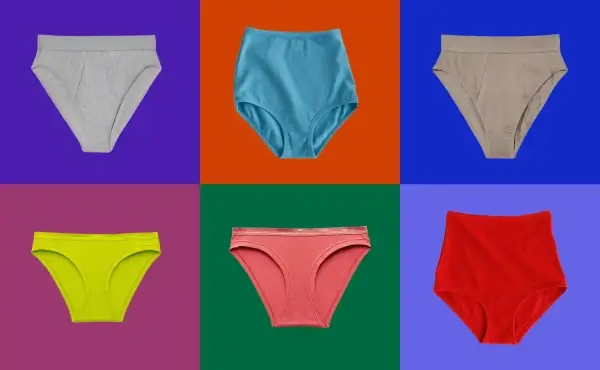
At HAVING, we've helped numerous brands develop period underwear tailored to their specific target markets. Our experience has shown that material selection significantly impacts consumer perception and satisfaction. Here's how to align materials with different market segments:
Material Selection by Consumer Segment
Consumidores ecológicos
Material Preferences:
- Algodón orgánico (Gots certificado)
- Bamboo lyocell (closed-loop processed)
- Poliéster reciclado
- Fibras de origen vegetal
- Componentes biodegradables
Consideraciones clave:
- Cadena de suministro transparente
- Procesos de producción sostenibles
- Contenido sintético mínimo
- Envases sin plástico
- Certificaciones (GOTS, OEKO-TEX, etc.)
Producto de ejemplo:
Una línea de ropa interior de época que utiliza tejido frontal de algodón orgánico, núcleo absorbente de bambú y un contenido sintético mínimo en la capa a prueba de fugas, con empaques sin plástico e información de fabricación transparente.
Performance-Focused Users
Material Preferences:
- Mezclas sintéticas técnicas
- Tejidos que absorben la humedad
- Materiales de secado rápido
- Tratamientos antimicrobianos
- Construcción ligera y transpirable
Consideraciones clave:
- Gestión de la humedad durante la actividad.
- Control de olores para uso prolongado.
- Volumen reducido debajo de la ropa deportiva.
- Durabilidad gracias al lavado frecuente
- Secado rápido entre usos.
Producto de ejemplo:
Ropa interior de período deportivo que utiliza una mezcla de nailon y spandex con tratamiento que absorbe la humedad, núcleo absorbente de microfibra diseñado para el movimiento y barrera liviana a prueba de fugas, diseñada específicamente para usar durante el ejercicio.
Consumidores orientados a la comodidad
Material Preferences:
- Fibras naturales suaves
- Mezclas modales y tencel
- Composiciones ricas en algodón
- Construcción sin costura
- Materiales flexibles y adaptables
Consideraciones clave:
- Suavidad contra la piel
- Transpirabilidad
- Flexibilidad y estiramiento
- Invisible bajo ropa
- Elásticos y adornos suaves
Producto de ejemplo:
Ropa interior de época con tejido exterior de mezcla de modal/algodón, núcleo absorbente rico en algodón y barrera flexible a prueba de fugas con construcción sin costuras y cintura suave para comodidad durante todo el día.
Price-Sensitive Segments
Material Preferences:
- Conventional cotton
- Mezclas de poliéster
- Materiales absorbentes rentables
- Construcción simplificada
- Ribetes y elásticos estándar.
Consideraciones clave:
- Funcionalidad esencial a menor costo
- Durabilidad para la percepción del valor
- Elementos de diseño simplificados
- Utilización de material eficiente
- Tamaño estándar
Producto de ejemplo:
Ropa interior de época asequible que utiliza una mezcla de algodón y poliéster, un diseño de núcleo absorbente eficiente y una barrera estándar a prueba de fugas, con estilo y empaque simplificados para mantener un precio accesible.
Material Selection by Product Type
Las diferentes aplicaciones de ropa interior de época requieren consideraciones de materiales específicas:
Everyday Period Underwear
Materiales óptimos:
- Algodón o mezclas ricas en algodón para mayor comodidad.
- Núcleo absorbente equilibrado (no demasiado voluminoso)
- Barrera estándar a prueba de fugas
- Elásticos suaves y flexibles.
Propiedades clave:
- Comodidad durante todo el día
- Absorbencia moderada
- Transpirabilidad
- Perfil discreto debajo de la ropa.
Overnight Period Underwear
Materiales óptimos:
- Tejidos faciales suaves y cómodos.
- Capacidad central absorbente mejorada
- Cobertura extendida de barrera a prueba de fugas
- Cintura suave pero segura.
Propiedades clave:
- Mayor absorbencia
- Cobertura extendida (especialmente trasera)
- Ajuste seguro durante el movimiento
- Comodidad para las posiciones para dormir
Athletic Period Underwear
Materiales óptimos:
- Mezclas sintéticas técnicas
- Tratamientos de reducción de humedad
- Núcleo absorbente de secado rápido.
- Construcción flexible y fácil de mover
Propiedades clave:
- Gestión de la humedad
- control de olores
- Ajuste seguro durante el movimiento
- Secado rápido entre actividades.
Traje de baño de época
Materiales óptimos:
- Sintéticos resistentes al cloro
- Materiales absorbentes de drenaje rápido
- Barrera a prueba de fugas altamente segura
- Tejidos resistentes a los rayos UV
Propiedades clave:
- Resistencia al agua mientras mantiene la absorción
- Secado rápido después de nadar
- Durabilidad cloro/agua salada
- Protección UV
Material Cost Considerations
La selección de materiales afecta significativamente el costo del producto. A continuación se ofrece una descripción general de los costos relativos:
| Categoría de material | Costo relativo | Consideración costo-valor |
|---|---|---|
| Algodón convencional | Medio | Buen equilibrio entre costo y familiaridad del consumidor. |
| Algodón orgánico | Alto | Costo premium justificado para un mercado con conciencia ecológica |
| Mezclas de poliéster | Bajo en medio | Rentable con buen rendimiento |
| Bambú | Medio-alto | La sensación premium justifica un mayor costo |
| Modal/Tencel | Alto | La sensación de lujo exige precios superiores |
| Sintéticos técnicos | Medio-alto | Los beneficios de rendimiento justifican el costo |
En HAVING, trabajamos con los clientes para encontrar el equilibrio óptimo entre la calidad del material, el rendimiento y el costo en función de su mercado objetivo y posicionamiento específicos. Nuestra experiencia tanto con minoristas del mercado masivo como Primark como con marcas premium nos brinda información sobre la selección efectiva de materiales en todos los rangos de precios.
Para obtener orientación sobre cómo crear una línea completa de productos con materiales adaptados a las diferentes necesidades de los consumidores, visite nuestro recurso en Curación de su colección: una guía B2B para estilos de ropa interior de época, absorbencias & Opciones de material.
Conclusión
The technology and materials used in period underwear are critical to product performance and consumer satisfaction. By understanding the complex interplay between face fabrics, absorbent layers, and leak-proof barriers, businesses can develop products that truly meet consumer needs.
At HAVING, we combine technical expertise with manufacturing capability to create period underwear that performs consistently while meeting safety and sustainability requirements. Whether you're developing a mass market line or premium specialized products, the right material selection and construction techniques are essential to success.
Preguntas frecuentes (preguntas frecuentes)
What is the most absorbent material for period underwear?
Las mezclas de microfibras especializadas ofrecen actualmente la relación más alta entre absorbencia y volumen, y algunas son capaces de contener hasta 4 o 5 tampones de líquido manteniendo un perfil relativamente delgado. En productos premium también se utilizan fibras técnicas avanzadas y polímeros superabsorbentes.
Are natural or synthetic materials better for period underwear?
Ambos tienen ventajas: los materiales naturales como el algodón y el bambú ofrecen transpirabilidad y comodidad contra la piel, mientras que los sintéticos suelen ofrecer mejores propiedades de absorción de la humedad y de secado rápido. Muchos productos de alto rendimiento utilizan combinaciones estratégicas de ambos.
How long should period underwear last?
La ropa interior menstrual de calidad debe mantener sus propiedades de absorbencia y a prueba de fugas durante aproximadamente 50 a 100 lavados si se cuida adecuadamente. Por lo general, esto se traduce en 1 o 2 años de uso regular antes de que se recomiende el reemplazo.
What makes period underwear leak-proof?
La barrera a prueba de fugas suele ser una capa delgada de laminado de poliuretano (PUL) o poliuretano termoplástico (TPU) que bloquea la transmisión de fluidos y al mismo tiempo permite cierta transpirabilidad. La estanqueidad eficaz también depende de la colocación adecuada de la barrera y del sellado de los bordes.
Can period underwear be made without synthetic materials?
Si bien es difícil producir ropa interior menstrual completamente libre de materiales sintéticos (particularmente la capa a prueba de fugas), hay disponibles productos con un contenido mínimo de sintéticos. Por lo general, estos utilizan algodón orgánico o bambú para telas faciales y capas absorbentes, y solo la barrera esencial a prueba de fugas contiene materiales sintéticos.
How is period underwear different from incontinence underwear?
Si bien existe una superposición en la tecnología, la ropa interior para incontinencia generalmente está diseñada para diferentes volúmenes de líquido, tasas de flujo y patrones de uso. En HAVING, hemos producido productos especializados de alta absorbencia para marcas como VIITA que abordan las necesidades de incontinencia con capacidad y ubicación de capa absorbente modificada.
What certifications should I look for in period underwear materials?
Las certificaciones clave incluyen OEKO-TEX Standard 100 (que garantiza que los textiles estén libres de sustancias nocivas), GOTS (para materiales orgánicos) y bluesign® (para una producción ambientalmente segura). Además, busque documentación específica sobre pruebas sin PFAS.
Obtenga una cotización gratuita para su período de proyectos de bragas
